
About Kristiansand
The story of southern Norway's capital — a city founded by a king in 1641, rebuilt after fire, and today the cultural heart of Sørlandet.
The Essentials
A quick portrait of the city at the mouth of the Otra river, on Norway's southern coast.
A City Founded by a King, Rebuilt by Fire
Kristiansand was founded on 5 July 1641 by King Christian IV of Denmark-Norway and named after himself — "Kristian" joined to sand, the sandy ground on which the town was built. The site was chosen with clear strategic intent. At the mouth of the Otra river, on the flat coastal shelf facing the Skagerrak, the new town could command the busy sea lane between Norway and Denmark.
The King's plan for the town was remarkably disciplined for its time. He laid out a strict grid of wide, straight streets — the Kvadraturen — partly so that the broad avenues would serve as firebreaks between densely packed timber buildings. Local legend holds that Christian IV marked the four corners of the square himself, using his walking stick to scratch the lines into the sand.
Four Great Fires
The firebreaks were not enough. Kristiansand burned four times in its history: in 1734; in 1859 in the Østerbrannen ("the Eastern Fire"); in 1880 in the Domkirkebrannen ("the Cathedral Fire"); and finally in 1892, when a vast blaze destroyed roughly half of the Kvadraturen. The aftermath of 1892 changed the city's architecture for good — rebuilding shifted decisively from timber to brick and stone.
Posebyen — The Town That Survived
One quarter escaped the flames. Posebyen, in the eastern half of the grid, preserves one of Northern Europe's largest surviving collections of low, white-painted wooden houses — most of them built in the 1700s. To walk its quiet lanes is to glimpse the town Christian IV originally planned. Nearby, the round Christiansholm Fortress has guarded the harbour since 1660, its cannons a reminder of a time when control of the Skagerrak trade route was worth fortifying. Inland, the neo-Gothic Kristiansand Cathedral by architect Henrik Thrap-Meyer was consecrated in 1885; its 70-metre tower still anchors the skyline.


A Regional Capital in Transition
Today Kristiansand is the administrative, academic and commercial centre of the Agder region, with a municipality of around 120,000 residents following the 2020 merger with the neighbouring municipalities of Søgne and Songdalen. It is one of the largest cities in Norway and the undisputed hub of the south.
The local economy has deep maritime roots, with a long heritage in shipping, offshore services and drilling-equipment technology. That base is now broadening quickly into green energy and battery production, alongside a fast-growing technology sector supported by the University of Agder (UiA) and the Digin IT cluster. The university, with campuses in Kristiansand and Grimstad, is a key driver of research, skilled labour and new business across the region.
Tourism is a pillar in its own right. Dyreparken Zoo & Amusement Park is one of the most-visited attractions in all of Norway, and the city's combination of beaches, archipelago and culture draws visitors from across Scandinavia and beyond every summer.
📍 Where Kristiansand Sits
On Norway's southern tip, Kristiansand is the natural gateway to Sørlandet — roughly 4.5 hours by train from Oslo and 3 hours from Stavanger, about 2–3 hours by ferry from Hirtshals in Denmark. See our Travel Guide for ferries, flights and local transport.
Art, Opera and the Festival Spirit
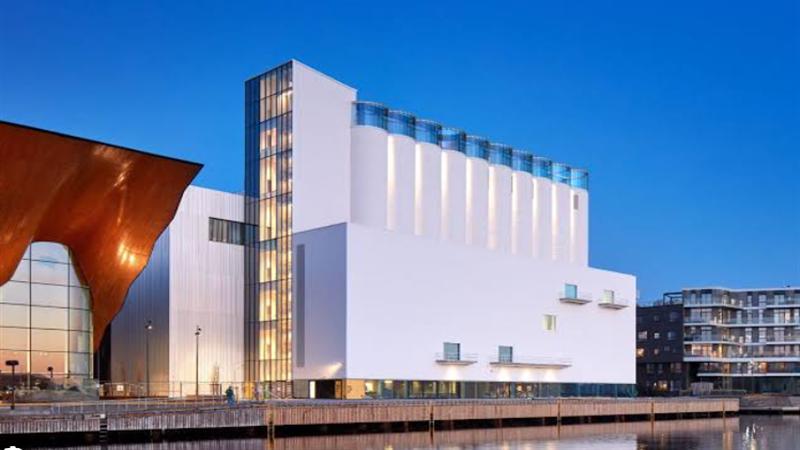
For a city of its size, Kristiansand carries unusual cultural weight. In May 2024, Kunstsilo opened on the Odderøya waterfront inside a converted 1935 grain silo. It now houses the Tangen Collection — the world's largest collection of Nordic modernist art — spread across nine floors of purpose-built galleries.
Just along the harbour, Kilden Performing Arts Centre opened in 2012 and is a genuine multi-art powerhouse, bringing together the Kristiansand Symphony Orchestra, Kilden Theatre and Kilden Opera under one roof. Its wavy oak wall, made from local timber, has become one of the region's most recognisable pieces of architecture.
Music runs deep here. The Quart Festival, held on Odderøya from 1991 to 2008, grew into Norway's largest music festival and drew names like David Bowie, Coldplay and Kanye West to the island. Although Quart ended, Odderøya remains a live-music and festival venue, and the city's calendar now includes summer events such as Palmesus and Ravnedalen Live. For a deeper look at the local scene, see our Festivals & Events section.
Sørlandsidyll and the Southern Character
The very name Sørlandet — "the Southern Land" — was coined here. The poet Vilhelm Krag, a son of the city, proposed it in a 1902 newspaper article, arguing that southern Norway deserved a name and identity of its own, alongside Østlandet, Vestlandet and Nord-Norge. The idea took hold, and an entire regional identity grew from it.
From that same sense of place came sørlandsidyll — the idea of white timber houses, calm water, warm summer light and unhurried coastal life. It remains the region's signature image. You will hear it too: locals speak with the distinctive skarre-r, the uvular "r" that marks out the Sørlandet dialect along this stretch of coast.
The traditional calendar is kept faithfully. 17 May, Norway's Constitution Day, brings the city out in force with children's parades and celebrations. St. Hans midsummer is marked with bonfires along the shore, and seafood straight from the harbour is a year-round staple. Underneath it all runs a deep attachment to friluftsliv — outdoor life — whether that means a morning swim, a forest run or an evening in a boat among the islands.
Nature Right on the Doorstep
Few cities of this size blend town and landscape so easily. The wooded hills of Baneheia and the lush valley park of Ravnedalen — both laid out in the 1870s — begin a short walk from the main square. The Odderøya peninsula, once a naval base, is now criss-crossed with coastal trails, swimming spots and old wartime gun emplacements. And beyond the harbour lies the skerry garden of islands that gives Sørlandet its character.
Explore Kristiansand
Now that you know the story, here's where to go next.
Top Attractions
Kunstsilo, Dyreparken, Posebyen, the fortress, the cathedral and 30+ more landmarks across the city and region.

Things to Do
Hiking, fishing, island hopping, shopping, festivals and family days out — everything to fill your stay.
Dining & Nightlife
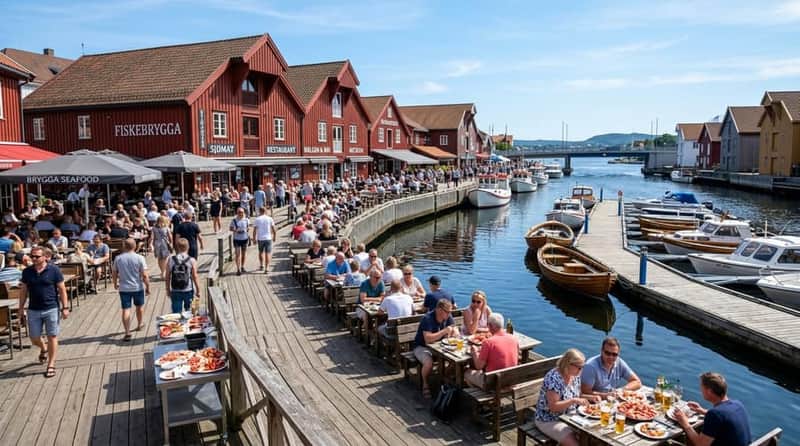
Fresh seafood at Fiskebrygga, harbour-side cafés, international restaurants and the city's best bars.

Travel Guide
Ferries from Denmark, Kjevik airport, trains, buses, weather by season and getting around town.